Tolerance Rings Outperform O-Rings and Other Non-Metallic Bearing Mounts
Tolerance rings outperform o-rings and polymer bearing mounts when temperature, radial load, or chemical exposure exceeds elastomer limits. Made from 301 stainless or hardened carbon steel, they maintain a stable spring rate without creep, heat buildup, or degradation — making them the preferred choice for demanding industrial, automotive, and HVAC bearing assemblies.
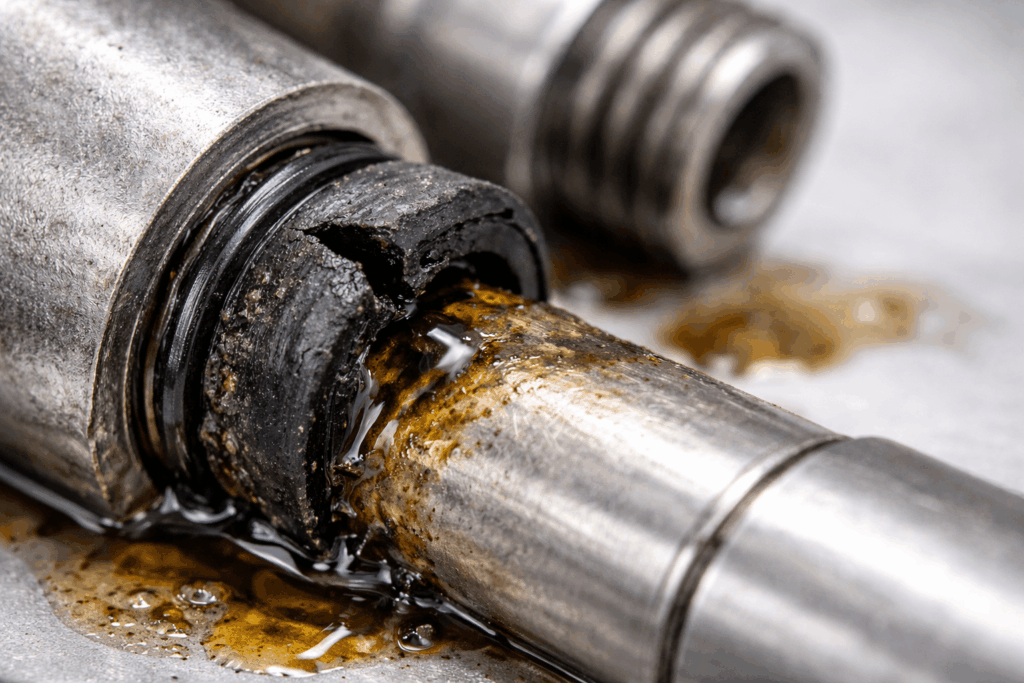
Elastomeric o-rings, rubber boots, silicone jackets, and plastic (polymer) inserts are sometimes used to mount and secure bearings within housing assemblies. This may be acceptable for room-temperature applications when radial and axial loads are relatively light, or when exposure to harsh chemicals is minimal. However, higher temperatures and chemical exposure can cause these polymeric materials to degrade as their molecular chains break down prematurely. This weakening of the material’s structure results in erratic retention, inconsistent hold, and loss of proper bearing position, ultimately leading to bearing failure within the product or assembly.
It is worth noting that o-rings and tolerance rings are not always competing solutions. In many assemblies, both are used together: the o-ring provides sealing against fluid or contamination ingress, while the tolerance ring provides the structural torque hold and radial retention. In other cases, a tolerance ring replaces an o-ring that had been used as a light-duty fastening component, particularly when high temperatures or chemical exposure have caused the o-ring material to break down.
When Polymeric Materials Fall Short
Polymeric bearing mount materials — including o-rings, rubber boots, plastic inserts, and silicone jackets — share common vulnerabilities in demanding environments:
- Temperature sensitivity: Durometer ratings shift with temperature, causing inconsistent spring rate and holding force.
- Chemical degradation: Exposure to lubricants, solvents, or industrial chemicals causes premature molecular breakdown.
- Heat buildup: Polymeric materials can trap heat within bearing assemblies, blocking the air and lubricant flow needed for proper cooling.
- Limited load capacity: Radial load capacity is restricted, making it difficult to maintain concentricity under heavier loads.
- Aging and deterioration: Over time, heat and environmental exposure cause polymeric materials to rot, crack, or lose elasticity.
The Tolerance Ring Advantage
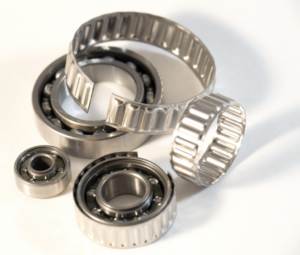
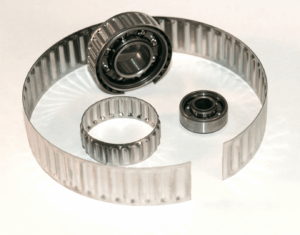
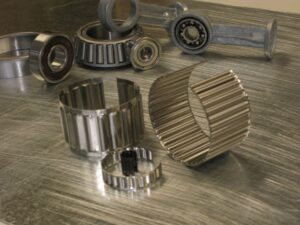
Tolerance rings are an excellent alternative and bearing mounting design solution when radial forces, axial loads, temperatures, or chemicals are beyond the endurance levels of polymeric materials. Made of metallic materials — typically 301 stainless steel or hardened carbon steel — tolerance rings provide a more consistent spring rate and holding force. Their spring-like wave geometry exerts stable radial holding forces without the preload decay associated with elastomer creep or thermal cycling. Tolerance rings are not affected by typical lubricants and most chemicals, thus far outlasting o-rings and other polymer-based bearing mounting options.
Tolerance Rings vs. O-Rings & Other Polymer Bearing Mounts
| Tolerance Rings | O-Rings, Rubber Boots, Plastic Inserts & Silicone Jackets |
|---|---|
| Stable and predictable spring rate | Durometer rating that varies with temperature |
| Able to maintain concentricity with heavy loads | Difficult to control concentricity with heavy loads |
| Can allow air or lubricant flow for cooling of bearings | Traps heat within bearings and blocks air and lubricant flow for proper cooling |
| Radial load capacities equivalent to bearing ratings | Radial load capacity is limited |
| Resistant to most chemicals and lubricants | Susceptible to degradation from chemical exposure |
| Stable metallic materials that will not break down over time | Can rot and deteriorate prematurely due to heat exposure and age |
The O-Ring Alternative
When your bearing mounting design must remain reliable across wide temperature ranges, heavy loads, or chemically aggressive environments, tolerance rings offer a proven metallic solution that polymer-based alternatives cannot match. Learn more about how tolerance rings can improve the longevity and performance of your bearing assemblies.
FAQs
What is the main difference between a tolerance ring and an o-ring in bearing mounting?
A tolerance ring is a metallic spring-steel component that provides radial retention and torque holding through wave-shaped geometry. An o-ring is an elastomeric seal. While o-rings can handle light-duty fastening at room temperature, tolerance rings maintain consistent holding force across wide temperature ranges, heavy radial loads, and chemical environments where elastomers degrade.
Can you use a tolerance ring and an o-ring together in the same assembly?
Yes. In many assemblies both are used simultaneously. The o-ring seals against fluid or contamination ingress while the tolerance ring provides structural torque retention and radial holding force. They serve complementary functions and are not always mutually exclusive.
At what temperature do o-rings become unreliable for bearing mounting?
O-ring reliability degrades as temperatures rise because durometer (hardness) ratings shift with heat, causing inconsistent spring rate and holding force. The exact threshold depends on material (nitrile, silicone, EPDM), but polymeric bearing mounts generally become unreliable in sustained elevated-temperature environments that metallic tolerance rings handle without performance change.
Are tolerance rings resistant to industrial chemicals and lubricants?
Yes. Tolerance rings made from 301 stainless steel or hardened carbon steel are resistant to most lubricants, solvents, and industrial chemicals. Unlike rubber or silicone alternatives, their molecular structure does not break down on chemical exposure, which is a key failure mode for polymeric bearing mounts.
When should an engineer replace an o-ring with a tolerance ring?
Replace an o-ring bearing mount with a tolerance ring when: (1) operating temperatures cause the o-ring material to shift in durometer or lose elasticity, (2) radial loads require concentricity control beyond elastomer capability, (3) chemical or lubricant exposure degrades the o-ring prematurely, or (4) heat dissipation is critical and the o-ring is trapping heat within the bearing assembly.