Engineering the Perfect Sound: How Precision Components Shape NVH Performance
A decade ago, noise, vibration, and harshness (known collectively as NVH) was often treated as a late-stage refinement step—something handled after mechanical design was finalized. Today, NVH performance has become a front-end design parameter. This shift is especially visible in electric vehicles, compact motors, and high-precision industrial equipment, where the absence of masking engine noise exposes even the smallest structural vibrations.
Research reinforces this trend. One study on bearing system dynamics shows that while the stiffness of rolling element bearing arrangements is well documented, damping behavior is far more complex to characterize because it depends on multiple interacting surfaces and contact conditions. This gap is one reason damping is often simplified or overlooked in early NVH modeling.
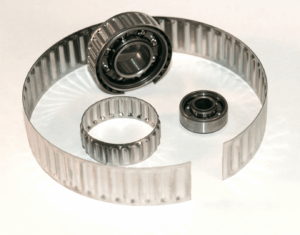
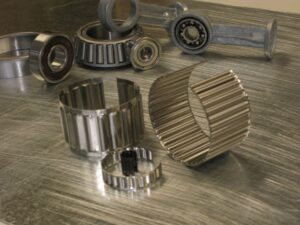
This is where precision components such as tolerance rings play a subtle but important role in managing vibration. Tolerance rings do more than ensure mechanical fit; they help control the relative motion between assembled parts. By maintaining consistent contact and preventing looseness, especially under thermal expansion/contraction or tolerance variation, they reduce the opportunity for vibration to originate or propagate in the first place. This results in quieter operation and improved perceived quality without adding hardware or complexity.
Where Vibration Really Comes From
In rotating systems such as fractional horsepower motors, blowers, electric drivelines, and small pumps, the primary vibration generator is the rotating assembly itself. Even a high-quality bearing will transmit structure-borne vibration into its housing. According to industry technical literature, bearing seats are one of the most efficient vibration transmission paths in any rotating design.
Once vibration enters the housing, it can resonate, radiate sound, or create tactile sensations that users interpret as poor quality. Engineers often attempt to treat these symptoms later with insulation, mass damping, or electronic compensation. But these measures add cost, weight, and complexity, and they don’t address the vibration at its source.
A better approach is to interrupt the vibration path early, before it has a chance to propagate. This is exactly what tolerance rings enable.
How Tolerance Rings Help with NVH in Real Designs
By maintaining strong, consistent contact between mating surfaces, tolerance rings provide the following practical benefits:
Reduced Relative Motion
Looseness between components is a primary source of micro-vibration, especially under thermal cycling (CTE differentials) and tolerance stack-up. The wave geometry keeps parts snug, reducing vibration at its source.
Lower Structure-Borne Noise
When parts are tight and stable, there is less excitation from cyclic loads transmitting through interfaces. That means less noise conducted from the shaft and bearing into the housing.
Fewer Opportunities for Resonance
Looseness or varying preload can create conditions where small vibrations are amplified. By minimizing relative movement, the assembly is less prone to those amplification effects, so quietness is improved without added mass or damping layers.
Consistent Contact Under Variation
Real-world components vary. The tolerance rings’ compliance ensures that consistent contact pressure is maintained, minimizing noise changes from part-to-part variation.
Together, these practical effects help engineers reduce vibration and noise early in the design, rather than masking it later with heavier parts, damping treatments, or electronic compensation.
Why NVH Matters More in Modern Designs
As consumer expectations rise (especially for electrified systems) NVH performance has become synonymous with perceived quality. A smooth, quiet motor suggests durability. A stable acoustic signature conveys refinement. Even in industrial applications, low vibration improves bearing life, reduces fatigue, and enhances reliability.
Tolerance rings provide a practical way to reduce vibration-related noise without redesigning a system’s core architecture. By choosing the right ring design (material and wave geometry), engineers can ensure that mating components remain consistently tight under operating loads and temperature changes. This reduces opportunities for vibration to initiate or transmit through the interface, helping products operate more quietly and reliably with minimal additional mass or assembly complexity.
This is especially valuable in applications like:
- EV accessory systems
- Appliance drives
- HVAC blower motors
- Precision industrial tools
- Small pumps and compressors
In all of these systems, NVH performance is a competitive differentiator. It can no longer be an afterthought.
The Future of Quiet, Refined Products Starts with Better NVH Tools
As industries continue to embrace electrification, efficiency, and user-centric design, the importance of NVH performance will only grow. Tolerance rings give engineers a compact, cost-effective way to shape vibration behavior at the source, resulting in smoother, quieter, and more refined products.
Instead of treating noise and vibration as problems to be masked, modern engineering teams are designing the right sound into their products from the start. Tolerance rings are one of the subtle but essential precision components enabling that evolution.
To learn more about reducing vibration with tolerance rings, visit: https://usatolerancerings.com/solutions/reduce-vibration.
Frequently Asked Questions
- How do tolerance rings improve NVH performance?
Tolerance rings improve NVH performance by maintaining consistent contact and reducing relative motion between assembled parts. This limits vibration initiation and transmission - Why are NVH issues more noticeable in EVs and quiet motors?
NVH issues are more noticeable in EVs and quiet motors because there is no engine noise to mask vibrational sounds. Small structural vibrations become audible, making interface-level damping more critical. - How do tolerance rings support vibration damping in rotating assemblies?
Tolerance rings support vibrational damping in rotating assemblies by reducing vibration that originates from interface looseness and preventing it from transmitting into surrounding structures. - Do tolerance rings maintain performance under tolerance stack-up?
Yes, tolerance rings maintain their performance under tolerance stack-up. Wave peaks maintain consistent contact pressure even when housings or shafts vary within allowable limits. - Where are tolerance rings most useful for noise reduction?
Tolerance rings are most useful for noise reduction when used in EV accessories, appliance drives, HVAC blowers, fractional-HP motors, industrial hand tools, and small pumps.