Torque Limiting Protection for Conveyors, Compressors, and Tube Mills
Torque limiters are a critical safeguard in industrial machinery. When a conveyor jams, a compressor shaft locks, or a rolling mill misfeeds, the resulting torque spike can exceed design limits in an instant. Without protection, that energy transfers directly into gears, bearings, or shafts which can lead to catastrophic failure, costly downtime, and expensive repairs.
Tolerance rings provide a compact built-in solution because the torque-limiting function is embedded directly in the shaft–hub interface. This design eliminates the need for external clutches or add-on devices and acts as a slip clutch mechanism that absorbs overload before it can be transmitted into critical components.
The Hidden Cost of Over-Torque
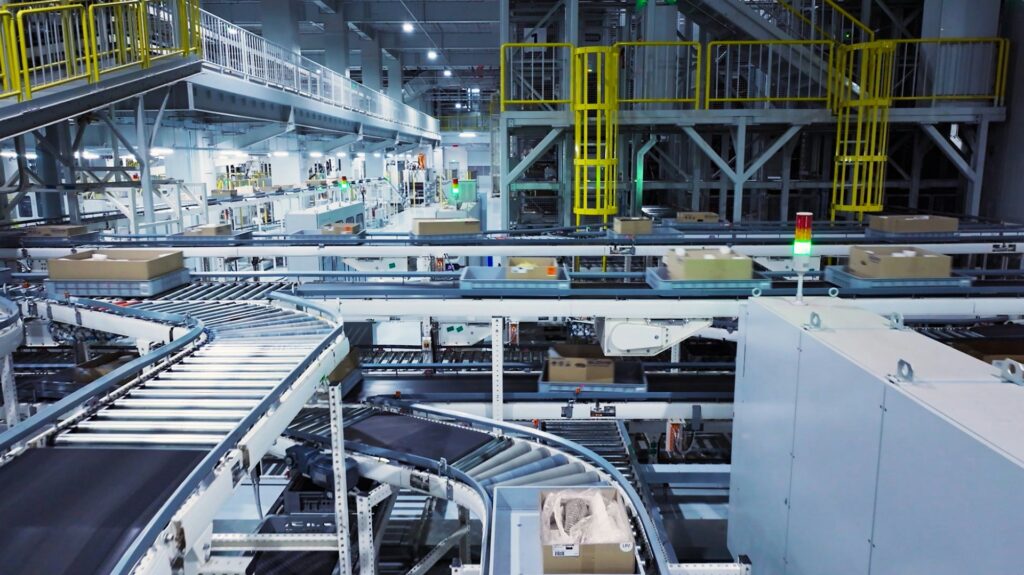
Over-torque events are more common than many realize, and they happen across industries. In bulk material handling conveyors, jams or belt misalignment can cause sudden stalls. In HVAC and process compressors, debris or thermal seizure may lock rotating shafts. In pumps, cavitation or dry-running generates abrupt load changes. And in tube and rolling mills, material misfeeds or stops send shock loads into the drive system.
Traditional couplings and press fits have no ability to yield under these conditions. Torque spikes transmit directly into gearboxes, shafts, and bearings.
According to industry studies, torque limiters are often the only safeguard against unexpected overloads that can cripple drive systems and lead to prolonged downtime. The result of unexpected overload is rarely minor and can lead to fractured housings, bent shafts, or gear tooth failure. Each incident leads to production stoppages, emergency maintenance, and in some cases, safety hazards for operators nearby.
A Built-In Slip Clutch
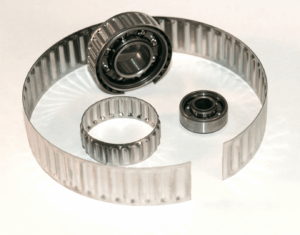
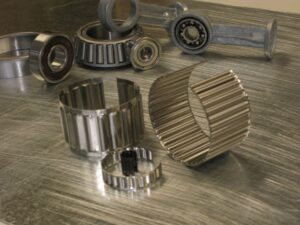
Tolerance rings change the equation. Their corrugated wave design introduces compliance into the interface between rotating components. Under normal operating torque, the fit is secure and efficient. When torque spikes beyond a pre-set threshold, the ring flexes and slips, dissipating excess energy before it reaches vulnerable components.
This function is similar to a self-resetting torque limiter:
- During normal operation, torque transmits smoothly with no effect on performance
- During an overload event, the ring slips at a controlled torque level, absorbing the spike
- After the event, the ring re-engages automatically, requiring no reset or replacement
Unlike shear pins, which fail once and require downtime for replacement, tolerance rings protect repeatedly without maintenance intervention.
Advantages Over Traditional Torque Limiters
Many torque protection devices exist—shear pins, detent clutches, friction limiters—but each has trade-offs. Shear pins must be replaced after failure. Detent clutches may wear or disengage unpredictably. Friction limiters can be bulky or require frequent adjustment. As demonstrated in comparative studies, no single method is universally ideal.
Consider the benefits of applying tolerance rings:
- They offer compact integration, fitting directly into the shaft–hub interface without the need for bulky add-on components
- They are self-resetting, providing automatic protection during an overload and re-engaging without downtime
- Their performance is highly predictable, with slip torque engineered to specific inch-pound or foot-pound thresholds
- They provide dual functionality, delivering both secure retention and overload protection in a single component
- They are typically far more cost-effective than external clutch or torque limiter systems.
Torque Limiter vs. Tolerance Ring
| Torque Limiter | Tolerance Ring | |
| Primary Purpose | Protect machinery from costly damage by preventing excessive torque from reaching connected components | Create a secure interference fit between cylindrical parts, with optional torque-limiting functionality |
| Function | Disengages or slips when torque exceeds a preset threshold | Spring-like corrugations compress to hold parts securely; engineered designs allow controlled slip under overload |
| Examples | Slip clutches, friction limiters, shear pins | Bearing mounts, gear couplings, sensor retention, motor assemblies |
| Dual Functionality | Purely protective device | Provides both retention and overload protection in one compact component |
| Applications | Power transmission systems, industrial drives, heavy machinery | Bearings, gears, compressors, pumps, electric motors, tube mills, and appliances |
| Advantages | Widely available, configurable torque settings, proven in heavy machinery | Compact, cost-effective, self-resetting, compensates for size variation and thermal expansion |
Torque Ring Applications by Industry
Conveyor Drive GearboxesProtects gears and shafts during belt jams or overloads in mining, packaging, and food processing. |
Compressor CouplingsPrevents damage during shaft lock-ups in HVAC, refrigeration, and chemical processing. |
Pump Shaft Gear MountsAbsorbs shock loads from cavitation, hydraulic lock, or dry-running, shielding seals, housings, and bearings. |
Rolling Tube EquipmentTube mills and rolling lines face high cyclic loads. Misfeeds or sudden stops create torque spikes that can shear shafts or strip gears. By integrating tolerance rings in drive rolls or mandrel couplings, manufacturers gain built-in overload protection that reduces downtime and extends service life. |
Design Considerations for Engineers
When specifying tolerance rings as torque limiters, engineers should consider:
- Slip torque range: Define the maximum overload the system can safely absorb
- Material compatibility: Ensure ring, shaft, and housing materials perform consistently together
- Environmental factors: Account for heat, lubrication, vibration, and duty cycles in service
- Safety factors: Include margin to handle variations in real-world load conditions
Tolerance rings are recognized as specialized fasteners capable of delivering both secure retention and engineered slip torque protection across a wide range of mechanical assemblies (GlobalSpec).
Over-torque events are unpredictable, but protection doesn’t have to be. By functioning as integrated slip clutches, tolerance rings safeguard conveyors, compressors, pumps, and rolling tube equipment from sudden torque spikes. Instead of catastrophic failures, overload events become brief interruptions, which in the end, saves downtime, repair costs, and extends component life.
Interested in torque limiting for your drive system? Speak with our engineering team about specifying tolerance rings for overload protection.
Frequently Asked Questions
How does a tolerance ring limit torque?
A tolerance ring limits torque with corrugated waves that flex under overload, allowing controlled slip. This prevents torque spikes from being transmitted to gears, shafts, or bearings.
What’s the advantage over a shear pin?
The advantage of a tolerance ring over a shear pin is that a shear pin breaks once and must be replaced. A tolerance ring slips only under overload and then automatically re-engages, protecting equipment without downtime.
Can tolerance rings be designed for specific torque thresholds?
Yes, tolerance rings can be designed for specific torque thresholds. Engineers can tune slip torque by adjusting wave geometry, material, and fit, going from inch-pounds to foot-pounds.
Are tolerance rings used in heavy-duty applications?
Tolerance rings are absolutely used in heavy-duty applications. They are proven in conveyor gearboxes, industrial compressors, fluid pumps, and rolling tube mills. Essentially, all environments where torque spikes are common.
Do they add bulk to the assembly?
No, tolerance rings do not add bulk to the assembly. Tolerance rings integrate directly into the interface, eliminating the need for large, external torque limiters.